
Diaphragmatic Endometriosis: When Endometriosis Affects the Upper Body
Updated: Oct 1
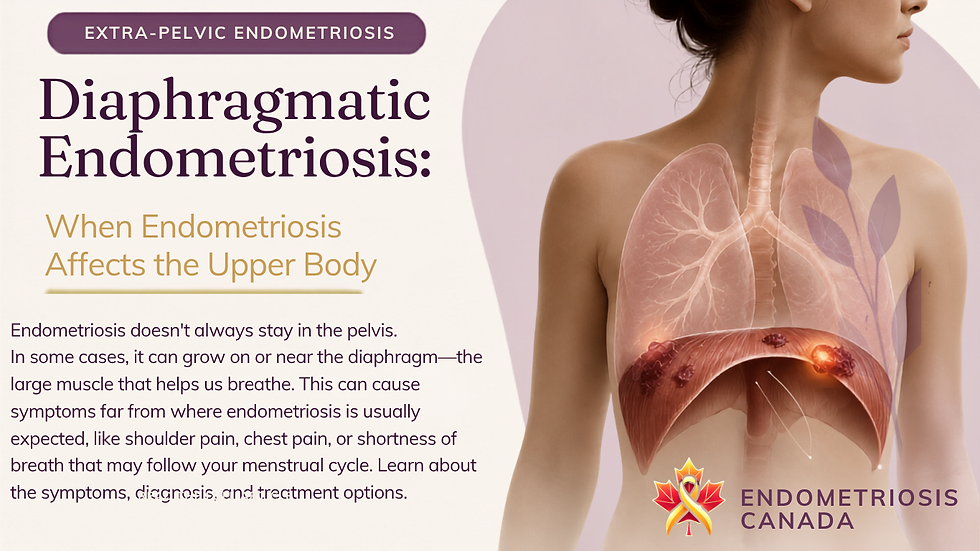
When most people think of endometriosis, they think of pelvic pain, painful periods, bowel symptoms, or fertility struggles. But endometriosis does not always stay in the pelvis.
In some cases, endometriosis can grow on or near the diaphragm — the large, dome-shaped muscle that helps us breathe and separates the chest from the abdomen. This is called diaphragmatic endometriosis.
Although it is considered rare, it is important for patients and healthcare providers to know about, especially when symptoms seem to follow a monthly or hormonal pattern.
What is diaphragmatic endometriosis?
Diaphragmatic endometriosis happens when tissue similar to the lining of the uterus is found on the diaphragm. It is considered a form of extra-pelvic endometriosis, meaning endometriosis outside the pelvis.
The diaphragm sits high in the body, under the lungs and heart. Because of this location, symptoms may feel very different from “typical” pelvic endometriosis.
Diaphragmatic endometriosis is often associated with more advanced or widespread endometriosis, but every patient is different. Some people have noticeable symptoms, while others may not know they have it until surgery.
Why shoulder pain can happen
Shoulder pain may sound unrelated to endometriosis, but it can happen because of referred pain.
The diaphragm shares nerve pathways that can send pain signals to the shoulder area. This means irritation on or near the diaphragm may be felt as pain in the shoulder, neck, ribs, or upper back rather than directly where the endometriosis is located.
For some patients, this pain can be sharp, stabbing, aching, or difficult to explain. It may also be dismissed as muscle strain, anxiety, gallbladder pain, acid reflux, or “just stress.”
Why it can be missed
Diaphragmatic endometriosis can be hard to diagnose because the symptoms do not always sound gynecological.
Patients may see several different providers before endometriosis is considered, including family doctors, emergency physicians, gastroenterologists, respirologists, or physiotherapists.
It may be missed because:
Symptoms are outside the pelvis
Pain may come and go
Imaging may not always show lesions clearly
Some patients have no obvious symptoms
Healthcare providers may not be familiar with extra-pelvic endometriosis
Shoulder, rib, or chest pain may be blamed on other causes
This is why tracking symptoms can be helpful, especially if pain appears to follow a monthly pattern.
How is it diagnosed?
Diagnosis may involve a combination of symptom history, imaging, and surgical evaluation.
A healthcare provider may ask about:
Timing of symptoms
Whether symptoms worsen around periods or ovulation
Past endometriosis diagnosis or surgeries
Chest, rib, shoulder, or breathing symptoms
History of pelvic pain, bowel symptoms, bladder symptoms, or infertility
Imaging such as ultrasound, MRI, or CT may sometimes be used, especially if chest symptoms are present. However, imaging does not always detect diaphragmatic lesions.
In many cases, diaphragmatic endometriosis is found during laparoscopic surgery for endometriosis. Because the diaphragm can be difficult to fully visualize, it is important that surgeons know to look above the liver and inspect the diaphragm when symptoms suggest upper-body involvement.
When to seek urgent care
Some symptoms should never be ignored.
Please seek urgent medical care if you have:
Sudden chest pain
Trouble breathing
Fainting or feeling like you may pass out
Coughing up blood
Severe shoulder or chest pain
Symptoms that feel new, intense, or frightening
These symptoms can have causes unrelated to endometriosis and should be assessed quickly.
Treatment options
Treatment depends on symptoms, location of disease, severity, and the patient’s goals.
Options may include:
Hormonal management
Hormonal medications may help reduce flares or suppress symptoms for some patients. This may include birth control, progestins, GnRH medications, or other options recommended by a physician.
However, hormonal treatment does not remove endometriosis. Some patients may not tolerate certain medications, and symptoms may return when treatment stops.
Excision surgery
For symptomatic diaphragmatic endometriosis, surgery may be considered. Excision surgery aims to remove endometriosis lesions. In more complex cases, care may involve a multidisciplinary team, such as an endometriosis excision surgeon and a thoracic surgeon.
The approach depends on whether the disease is on the abdominal side of the diaphragm, within the diaphragm, or connected to thoracic endometriosis.
Multidisciplinary care
Because symptoms can involve the pelvis, abdomen, chest, ribs, shoulder, and breathing, patients may benefit from a team approach.
This may include:
Endometriosis excision specialist
Thoracic surgeon, if chest involvement is suspected
Pelvic floor physiotherapist
Pain specialist
Gastroenterologist or respirologist when needed
Mental health support for medical trauma and chronic pain
Questions to ask your doctor
You may want to bring these questions to your appointment:
Could my shoulder, rib, or chest pain be related to endometriosis?
Do my symptoms suggest diaphragmatic or thoracic endometriosis?
Would MRI or other imaging be helpful in my case?
If I have surgery, will the diaphragm be inspected?
Do you have experience treating extra-pelvic endometriosis?
Would a thoracic surgeon be needed?
What symptoms should send me to the emergency room?
What are the risks and benefits of medical management versus surgery?
Tracking your symptoms
Because diaphragmatic endometriosis can be cyclical, symptom tracking can be very useful.
Try noting:
Location of pain
Pain severity
Whether it happens around ovulation or your period
Shoulder, rib, chest, or breathing symptoms
Nausea, bowel, or bladder symptoms
Activities that worsen symptoms
Medications or heat/ice that help
Any emergency visits or imaging results
Bringing this information to appointments can help providers see patterns that may otherwise be missed.
Upper-body pain can feel confusing, especially when you have already been told endometriosis is “just period pain” or only affects the pelvis.
But endometriosis can be complex, and for some patients, it may involve areas far beyond the uterus and ovaries.
If you have cyclical shoulder, rib, chest, or upper abdominal pain, it is worth discussing diaphragmatic or thoracic endometriosis with a knowledgeable healthcare provider.
You deserve to be listened to, believed, and properly assessed.
Explore patient resources

$50
Product Title
Product Details goes here with the simple product description and more information can be seen by clicking the see more button. Product Details goes here with the simple product description and more information can be seen by clicking the see more button

$50
Product Title
Product Details goes here with the simple product description and more information can be seen by clicking the see more button. Product Details goes here with the simple product description and more information can be seen by clicking the see more button.
$50
Product Title
Product Details goes here with the simple product description and more information can be seen by clicking the see more button. Product Details goes here with the simple product description and more information can be seen by clicking the see more button.


Comments